Four Warehouse Challenges Automation Solves
.
Four Warehouse Challenges Automation Solves
.
Warehouses are under growing pressure to store more, process orders faster and maintain accuracy while controlling space and labour costs. A Kardex survey of more than 100 warehouse leaders reflects this reality: 62.3% identified inventory control as a major operational challenge, 46.2% highlighted space constraints and 41.5% pointed to picking accuracy.
Across manufacturing, e-commerce, retail, pharmaceuticals and third-party logistics, these challenges increasingly shape warehouse automation strategies. Based on Kardex’s experience across industries, four areas stand out where automation delivers measurable operational impact.
.
See how warehouse automation transforms storage, picking and material flow.
.
1. Automation turns limited warehouse space into capacity
For many companies, warehouse space has become a direct constraint on growth. Expanding the building, relocating operations or renting additional storage adds cost and complexity, while traditional shelving often leaves valuable vertical space unused.
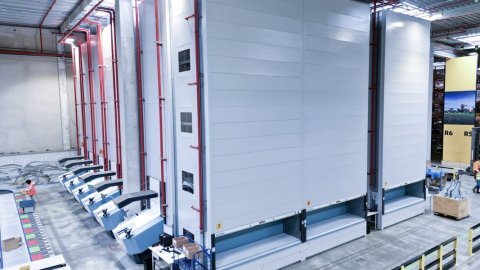
Automated storage and retrieval systems (ASRS) transform this equation. Kardex Shuttle Vertical Lift Modules (VLM) use the full available building height and consolidate inventory into a compact footprint. Kardex automated storage solutions achieve up to 85% floor-space savings, freeing valuable space for production, packing or further growth.
For higher-volume small-parts storage, AutoStore™ by Kardex delivers high-density robotic storage within a compact footprint. Its cube-based design adapts to columns, mezzanines and irregular building layouts, making efficient use of existing warehouse space.
2. Automation creates accurate, transparent inventory
Inventory control ranked as the most frequently cited challenge in the Kardex survey, with 62.3% of respondents identifying it as a key concern. As SKU numbers increase and inventory spreads across multiple areas, manual processes create discrepancies, searching time and unnecessary stock movements.
Automated warehouse systems establish controlled, traceable material flows. Solutions such as Kardex Shuttle, Kardex Miniload-in-a-Box and AutoStore™ assign inventory to defined storage locations and deliver the required goods directly to the operator. The Miniload-in-a-Box, for example, combines high-density storage with automated picking and buffering for fast-moving small parts.
Software completes the picture. Kardex FulfillX, developed specifically for AutoStore, connects automation with existing warehouse systems and coordinates inventory, orders and material flow. The result is greater visibility, higher inventory accuracy and fewer manual decisions throughout the picking process.
3. Goods-to-person automation increases productivity
Traditional order picking consumes significant labour through walking, searching, reaching and repetitive handling. Goods-to-person automation reverses the process: instead of employees travelling through the warehouse to find inventory, the system delivers the required goods directly to an ergonomic workstation.
Kardex automated picking solutions reduce unnecessary travel, support guided picking and standardise processes. Combined with software such as the Kardex Power Pick System, automated storage systems increase picking speed, improve accuracy and make onboarding easier.
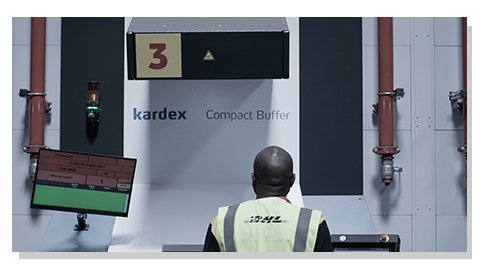
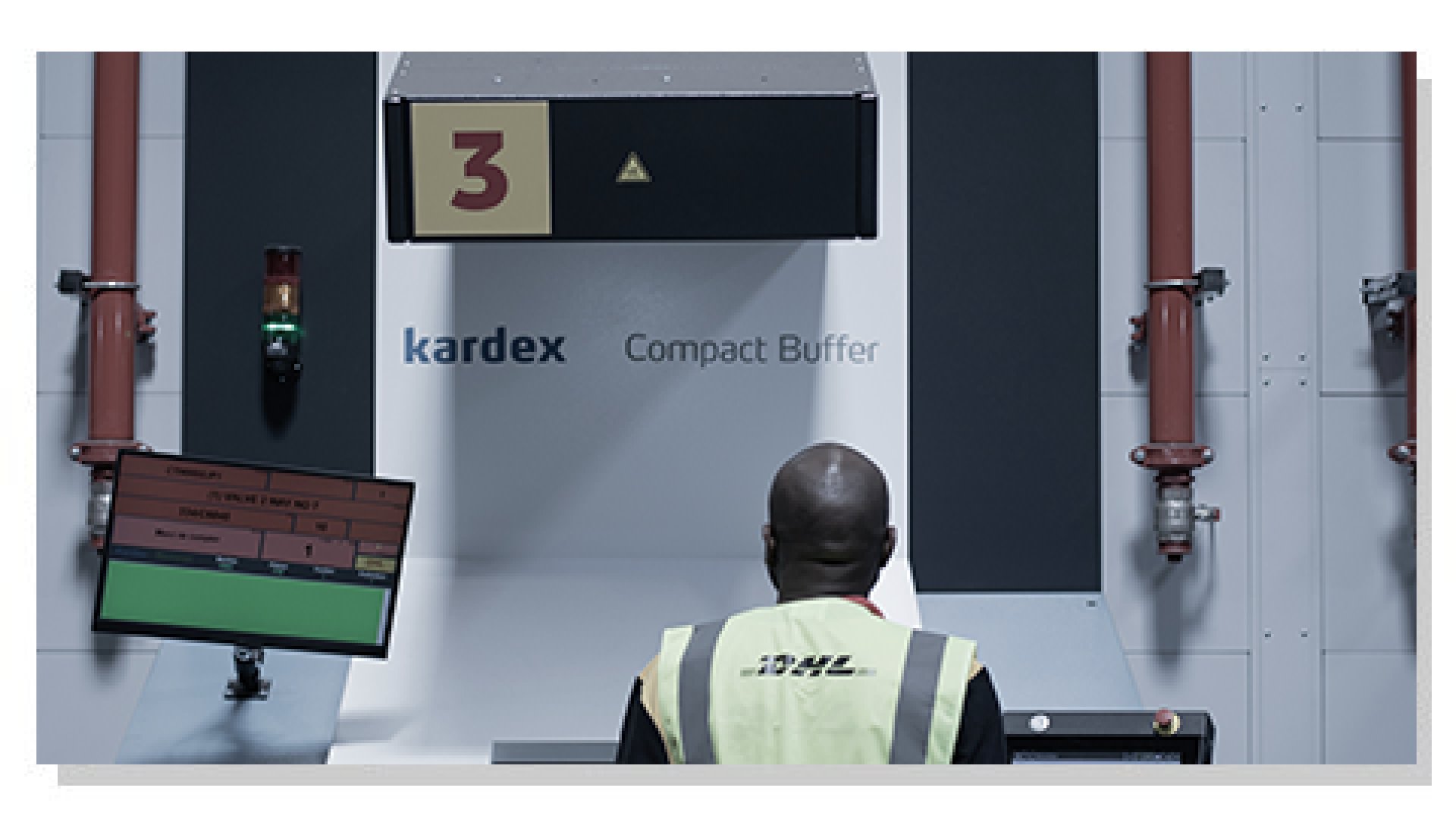
The impact is visible in real operations. DHL Supply Chain implemented six Kardex Miniload-in-a-Box units and three Kardex Shuttle systems to manage around 35,000 parts and more than 600,000 order lines per year, exceeding its original productivity targets.
IKEA Components combines six Kardex Megamat Vertical Carousel Modules, four Kardex Shuttle VLMs and Kardex Power Pick System software. With the integrated setup, eight operators process up to 15,000 items per day.
4. Scalable automation keeps pace with growth
Warehouse requirements never remain static. Order volumes fluctuate, SKU portfolios expand and seasonal peaks put additional pressure on storage and fulfilment. Fixed layouts struggle to respond when the business changes.
Modular warehouse automation creates flexibility from the beginning. AutoStore™, Kardex Shuttle and Kardex Miniload-in-a-Box support scalable system concepts in which storage capacity, workstations and performance expand as operational requirements grow.
This approach shifts warehouse planning away from designing only for today's volumes. Instead, automation creates an infrastructure that evolves with the business, supports peak periods and protects the original investment as requirements change.
Automation starts with the operational challenge
There is no single automation technology for every warehouse. Space constraints, inventory control, picking performance and scalability require different combinations of hardware, software and process design.
At Kardex, warehouse automation starts with understanding the operation: What limits performance today? Where is capacity being lost? Which processes consume the most time and labour? What will the warehouse need to achieve in three or five years?
Only then comes the technology. The first question is therefore not:
“Which automation system should we choose?” It is: “Which operational challenge are we solving?”
.
Explore Kardex warehouse storage and picking solutions and meet their experts at TRANSLOG Connect on 25–26 November 2026 at Crowne Plaza Budapest!
.